
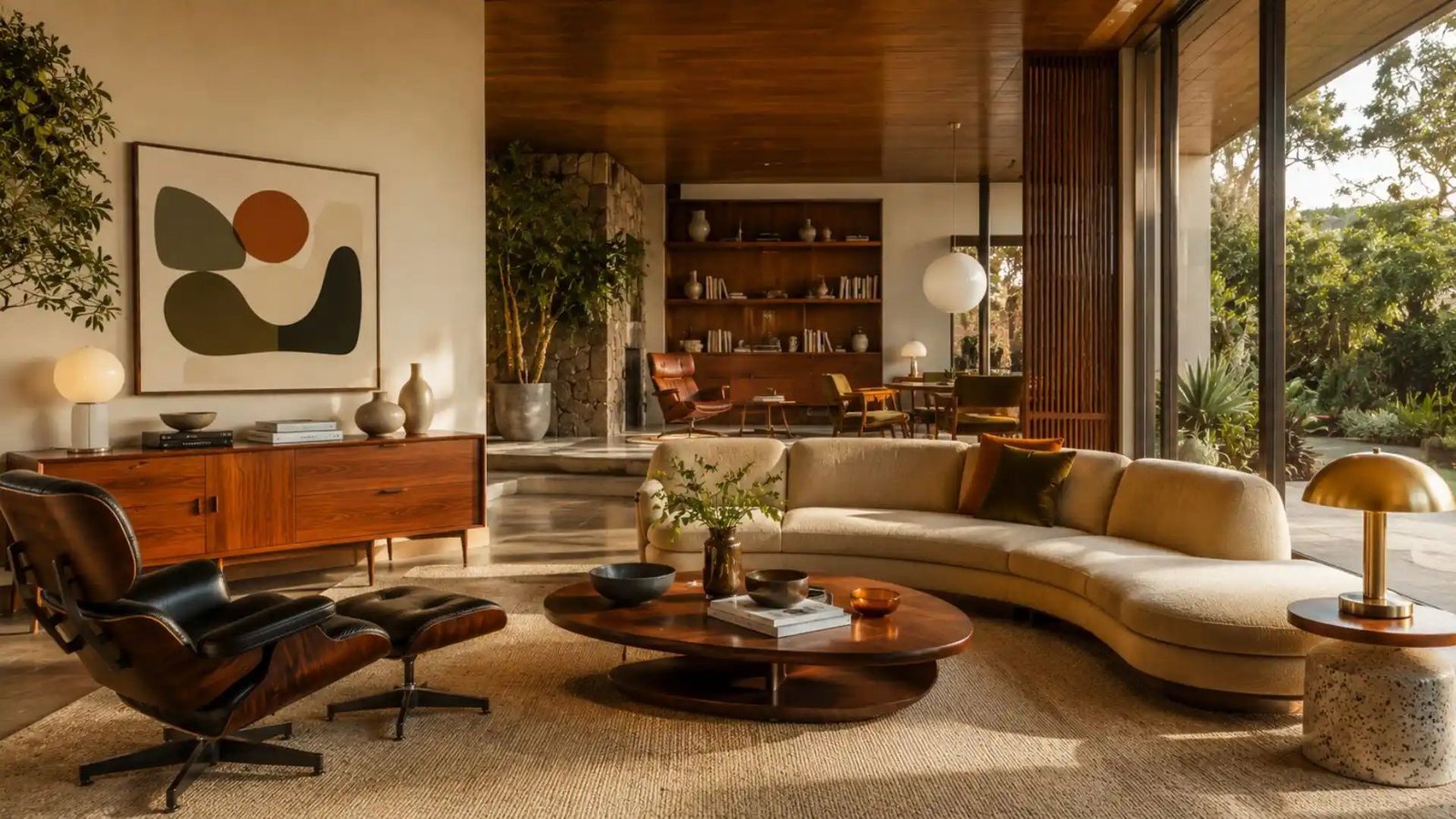
Introduction
There’s something instantly calming about stepping into a well-designed mid century modern house. The space feels open, balanced, and easy to live in. Natural light flows effortlessly, layouts feel intentional, and nothing seems out of place.
This is the strength of mid-century modern design—it focuses on how a home works, not just how it looks. Whether you’re renovating a midcentury modern house, upgrading a mid century modern apartment, or planning a new build, this approach helps create spaces that are both practical and timeless.
Expert Tip: Focus on layout first, not decor. A well-planned space will always outperform an over-decorated one.
Why Homeowners Love Mid-Century Modern Design
Homeowners prefer a mid century house style because it simplifies everyday living. Instead of clutter and over-decoration, the focus is on clarity and usability.
Key reasons homeowners choose this style:
- Open layouts improve movement and space efficiency
- Minimal design reduces maintenance and visual clutter
- Natural light enhances comfort and mood
- Functional layouts support modern lifestyles
A well-planned mid century modern house creates a balance between comfort and simplicity, making it ideal for long-term living.
What Is a Mid-Century House?
A mid-century house refers to homes built between the 1940s and 1970s, designed with a focus on function and efficiency.
Core features of a mid century house design:
- Open floor plans
- Large windows and glass panels
- Clean architectural lines
- Indoor-outdoor connection
These features define mid century architecture and continue to influence modern homes today.
Expert Tip: Minimal doesn’t mean empty—it means intentional.
What Makes This Style Timeless
A mid-century modern house remains relevant because it adapts easily to changing lifestyles. Instead of following trends, it focuses on principles that always work.
Why it lasts?
- Prioritizes functionality over decoration
- Works for both large homes and apartments
- Easily blends with modern interiors
- Maintains long-term property value
A strong mcm home design is built to perform over time, not just look good temporarily.
Mid Century Modern Interior Design Characteristics
Understanding mid century modern interior design characteristics is essential for achieving this style correctly.
Key characteristics:
- Clean lines and simple forms
- Open and functional layouts
- Large windows for natural light
- Natural materials like wood and stone
- Minimal decoration
- Low-profile furniture
These elements define a well-balanced mid-century interior.
Mid-Century Modern Living Room Design
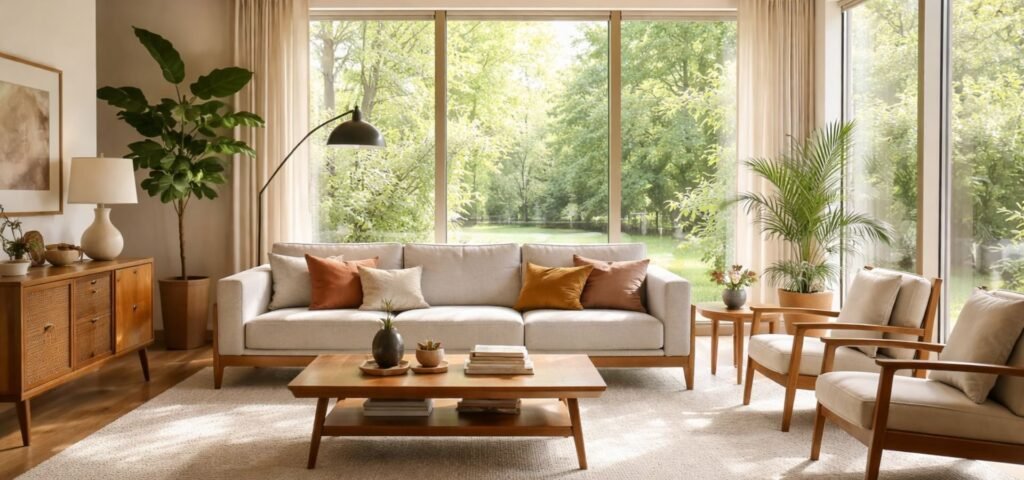
Open living room with large windows and low furniture
The living room is the heart of a mid-century modern house. It should feel open, usable, and comfortable.
Best practices:
- Use clean-lined furniture
- Keep spacing open
- Add subtle textures
- Create balanced seating areas
Expert Tip: Plan window placement early in the design phase to optimize how natural light flows through a home, making it one of the most valuable features you can incorporate.
Mid-Century Modern Kitchen Design
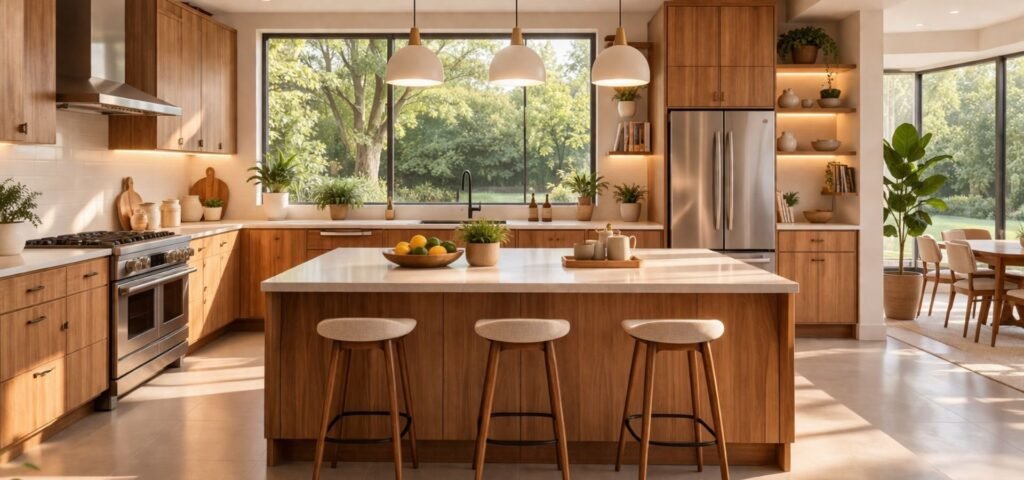
Flat cabinets and minimal layout
A kitchen in a mid century house design focuses on efficiency and simplicity.
Key design elements:
- Flat-panel cabinets
- Minimal countertops
- Functional layout
- Integrated storage
Keeping the space uncluttered is essential to maintain the overall design.
Mid-Century Modern Bedroom Design
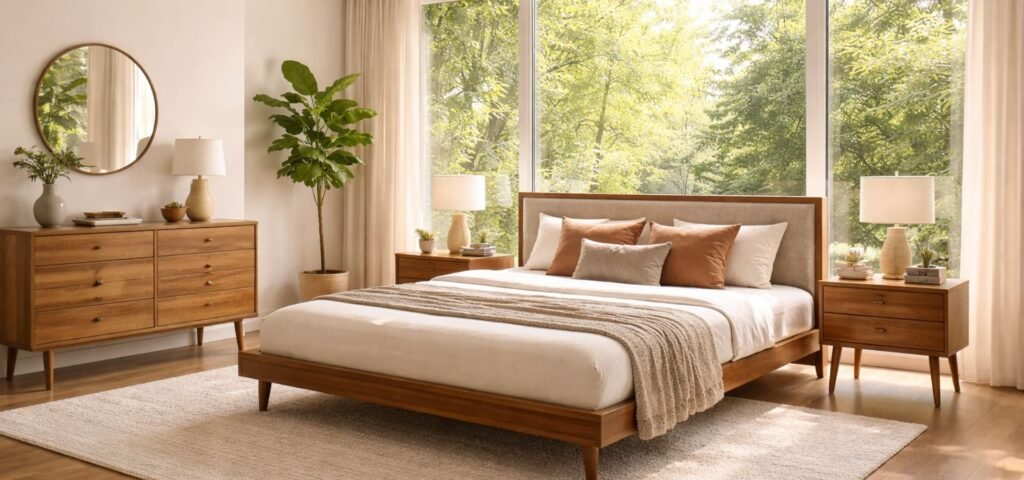
Minimal furniture and warm tones
A bedroom inspired by a 1950’s mid century modern house interior should feel calm and uncluttered.
Design approach:
- Minimal furniture
- Warm neutral tones
- Clean layout
- Limited decor
This creates a relaxing and functional environment.
Mid-Century Modern Color Palette Guide
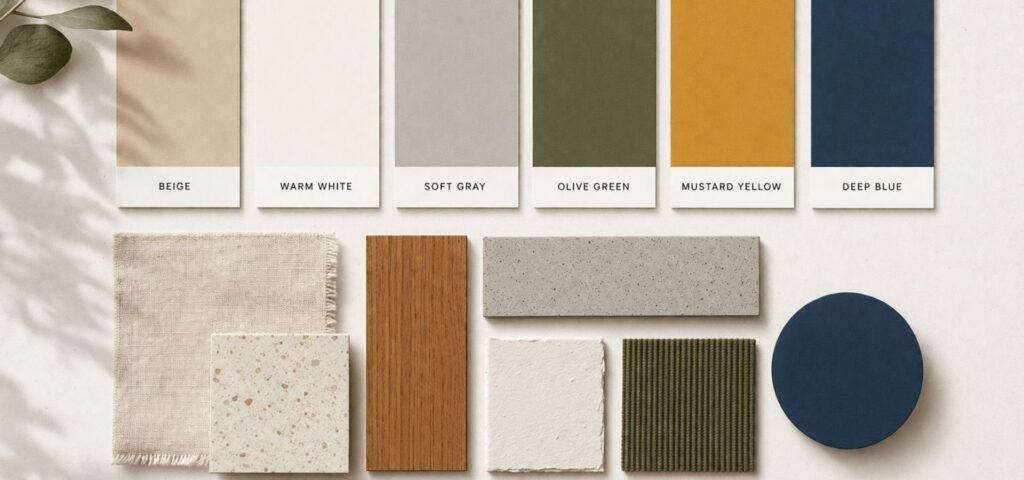
Color in a mid-century modern space should be controlled and balanced.
Base colors:
- White
- Beige
- Soft gray
Accent colors:
- Olive green
- Mustard yellow
- Deep blue
A minimal mid century modern approach keeps colors simple, while extreme minimalism reduces them further for a refined look.
Iconic Elements of Mid-Century Modern House Designs
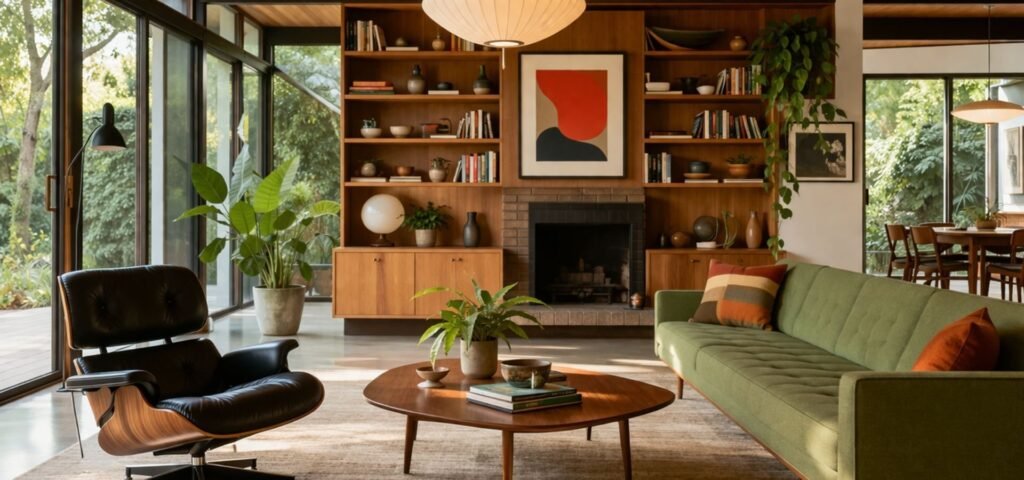
Certain features make mid century modern house designs instantly recognizable.
Signature elements:
- Tapered-leg furniture
- Statement lighting
- Warm wood finishes
- Built-in storage
- Large glass panels
These elements add character without overwhelming the space.
What It Feels Like to Live in a Mid-Century Modern Home
Living in a mid-century house creates a different experience compared to traditional layouts.
Key benefits:
- Better flow between spaces
- More natural light throughout the day
- Reduced clutter and improved organization
- Strong indoor-outdoor connection
This makes the home feel more open, functional, and comfortable.
What Does It Cost to Achieve This Style?
The cost of creating a mid century modern house depends on the level of renovation and materials used.
Cost factors:
- Layout changes
- Window upgrades
- Material quality
- Custom furniture or storage
Cost overview table:
| Level | Description | Cost Impact |
| Basic | Furniture & minor updates | Low |
| Mid-Level | Layout improvements & finishes | Medium |
| Premium | Structural changes & custom design | High |
A well-planned mid century house design often delivers strong long-term value.
Before and After: Transforming a Mid-Century Home
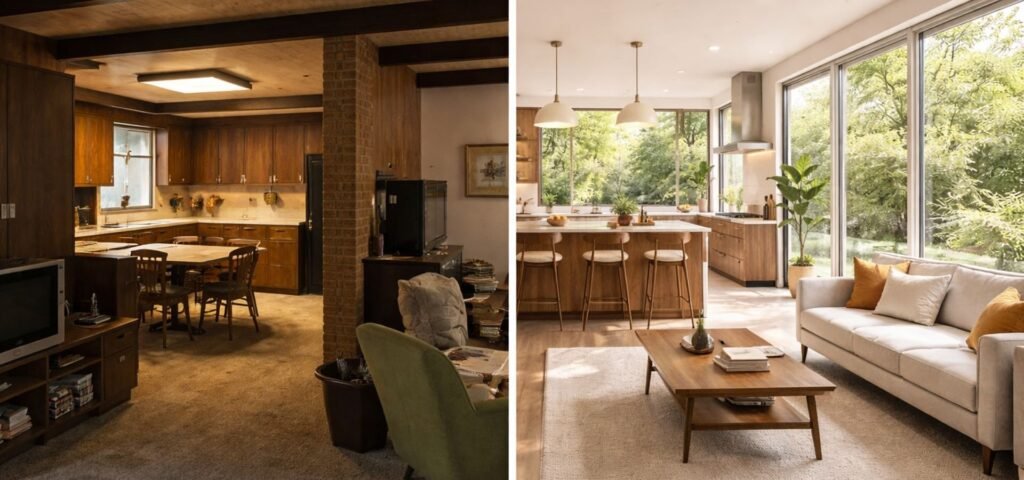
Most older homes need updates to meet modern needs.
Common improvements:
- Remove walls for open layout
- Increase window size
- Replace heavy furniture
- Use natural materials
A midcentury modern house transformation can significantly improve both function and appearance.
How to Mix Modern and Traditional Decor
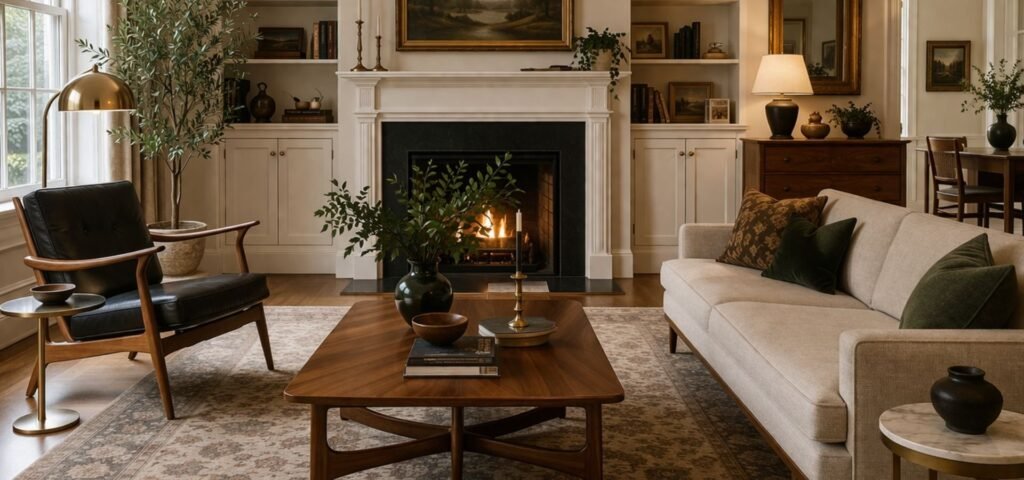
If you’re exploring how to mix modern and traditional decor, balance is key.
Practical tips:
- Start with a mid-century modern base
- Add traditional elements in small amounts
- Keep color palette consistent
- Avoid overcrowding
This approach helps create a cohesive and unique design.
Pros and Cons of Mid-Century Modern Homes
Before committing to a mid century modern house, it’s important to understand both the advantages and limitations of this design style.
Pros:
- Timeless design
- Efficient layouts
- Strong natural light
- Works for various home sizes
Cons:
- Older homes may need renovation
- Limited storage in original layouts
- Large windows may require upgrades
Is Mid-Century Modern Right for You?
This style is ideal for homeowners who:
- Prefer clean and uncluttered spaces
- Value function over decoration
- Want a long-term design solution
- Appreciate modern yet timeless aesthetics
Whether you’re designing a mid century modern apartment or a full home, this approach offers practical benefits.
Mid-Century Modern Design Checklist
Use this checklist to guide your design:
- Open layout
- Clean architectural lines
- Minimal decoration
- Natural materials
- Large windows
- Functional furniture
How to Choose the Right Builder for a Mid-Century Modern House
Designing a mid century modern house is not just about aesthetics—it requires a builder who understands space planning, clean lines, and functional layouts. The right builder can make the difference between a home that simply looks modern and one that truly reflects authentic mid-century modern design.
What to Look for in a Builder
- When selecting a builder for your project, focus on experience and design understanding—not just pricing.
- Proven experience in mid-century house design or modern homes
- Strong portfolio with open layouts and minimal interiors
- Understanding of mid-century modern interior design characteristics
- Ability to work with natural materials like wood and stone
- Knowledge of large window installations and structural balance
- A builder familiar with mcm home design will ensure your home feels cohesive, not forced.
How Dave Isaacs Homes Delivers Better Results
Design is only as good as its execution. Dave Isaacs Homes focuses on delivering mid century modern remodels and builds that are both practical and long-lasting.
Their approach includes:
- Smart layout planning for better flow
- Strategic window placement for natural light
- Careful material selection
- Functional design for everyday use
If you’re planning your own project, taking the next step with the right team can make all the difference. Book a consultation to discuss your vision and explore the best approach for your home. Start your custom home journey with a team that understands both design and construction.
Conclusion
A well-designed mid-century modern house is more than just visually appealing. It’s practical, efficient, and built for everyday living. By focusing on simplicity, natural light, and functionality, you can create a home that remains comfortable and relevant for yearsThe key is to prioritize layout, choose materials wisely, and design with purpose.
Frequently Asked Questions
- What is a mid-century modern house?
A mid-century modern house is a home style from the 1940s–1970s featuring open layouts, clean lines, large windows, and a strong indoor-outdoor connection. - What are mid century modern interior design characteristics?
Key characteristics include clean lines, minimal decor, natural materials, large windows, and functional, open spaces designed for everyday living. - Why is mid-century modern design still popular?
It remains popular because of its timeless look, practical layouts, natural light, and ability to blend easily with modern interiors. - Is mid-century modern design expensive?
It can range from affordable to high-end depending on materials, layout changes, and custom features. Simple updates are budget-friendly, while renovations cost more. - Can I use mid-century modern design in a small home or apartment?
Yes, mid-century modern design works very well in small spaces due to its minimal approach, open layouts, and focus on functionality.