
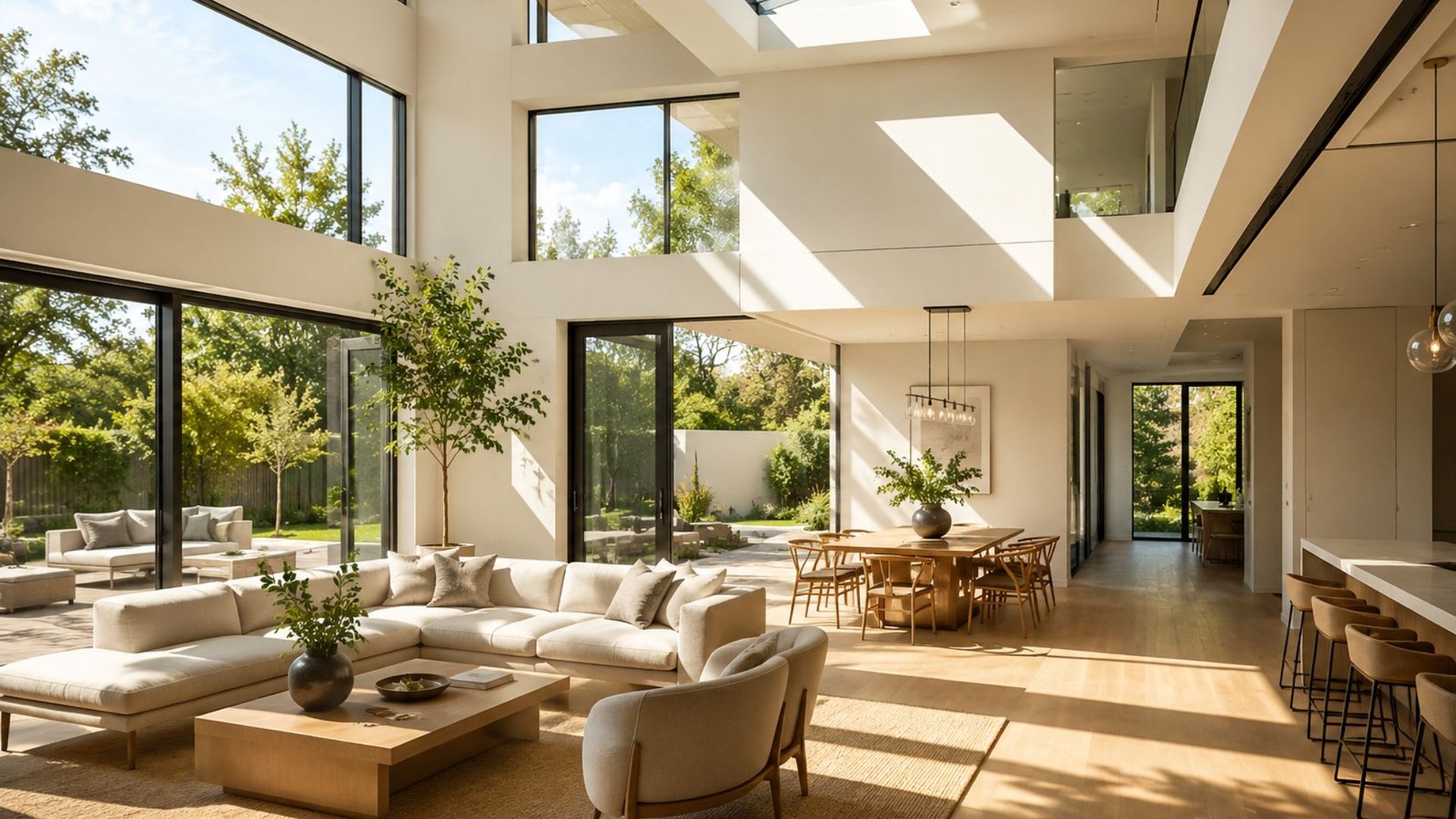
Natural light is one of the most powerful elements in home interior designs, especially in luxury modern home designs and contemporary spaces. Today, many homeowners focus on interior design with natural light because bright, open spaces improve both comfort and functionality. A well-lit home feels more open, comfortable, and visually appealing. Builders and designers today focus heavily on modern natural-light house design and natural lighting home design because it improves daily living, enhances architectural details, and reduces reliance on artificial lighting.
Whether you are building a new house, planning a renovation, or working with a home designer on a home addition design, thoughtful planning can significantly increase the amount of daylight entering your home.
This guide explains practical strategies professionals use to bring more natural light into residential spaces.
Why Natural Light Matters in Modern Interior Design
Daylight influences both the appearance and functionality of a home. Proper natural light in interior design plays a key role in luxury interior design homes and white home interior design, where brightness enhances clean, modern aesthetics while supporting energy efficiency.
Modern buildings are designed to maximize natural light because daylight helps create healthier, more energy-efficient living environments while improving the overall feel of interior spaces.
Key benefits include:
- Brighter and more inviting living spaces
- Reduced daytime electricity usage
- Improved mood and productivity
- Stronger visual connection to outdoor spaces
- Enhanced architectural features and interior finishes
Start With Proper Home Orientation
One of the first steps in maximizing daylight is understanding how the sun moves across your property, which is essential in both modern home exterior design and smart home design planning. One of the best answers to how to use natural light in design is understanding home orientation and how sunlight enters different areas throughout the day.
Working with an experienced professional ensures that your home is positioned correctly to maximize natural light. Learn more about how to select the right expert in our guide on how to choose the right builder for your dream home.
Typical strategies include:
- South-facing windows for consistent daylight
East-facing windows for gentle morning light - Controlled west-facing openings to manage afternoon heat
- Strategic roof overhangs for seasonal shading
This early planning stage plays a major role in effective home design.
Use Larger, Well-Placed Windows
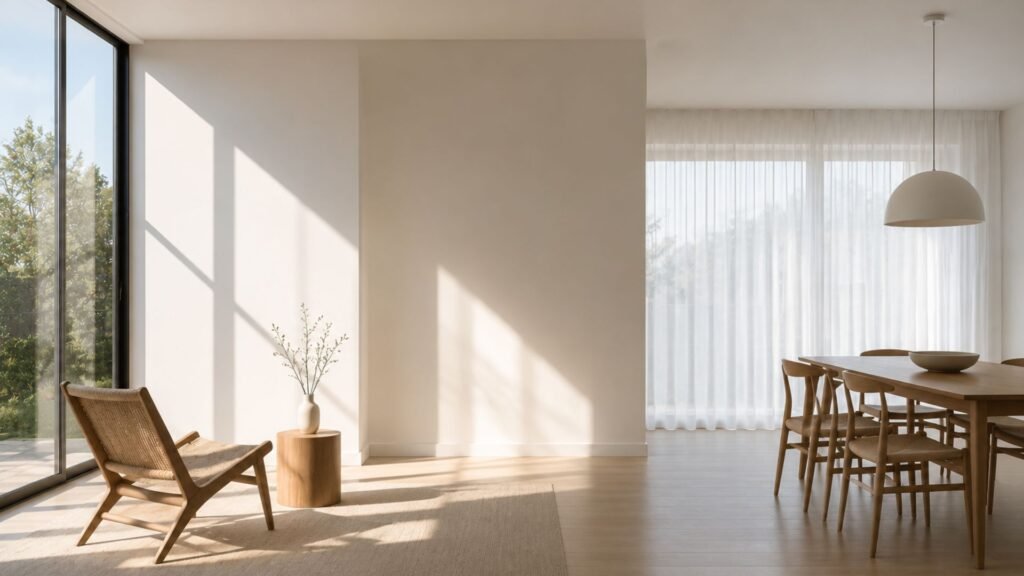
Windows are the primary source of daylight inside a home. In luxury home interior designs and mid-century modern home design plans, windows are carefully sized and positioned to distribute sunlight evenly across rooms.
This approach is common in daylight optimized home design, where window placement is carefully planned to improve brightness without creating excessive heat.
Popular window design approaches include:
- Floor-to-ceiling windows in living areas
- Corner windows that widen the light angle
- Clerestory windows are placed higher on the walls
- Glass sliding doors connecting the interior and exterior spaces
These solutions allow daylight to reach deeper into the home.
Design Open Layouts for Better Natural Lighting in Interior Design
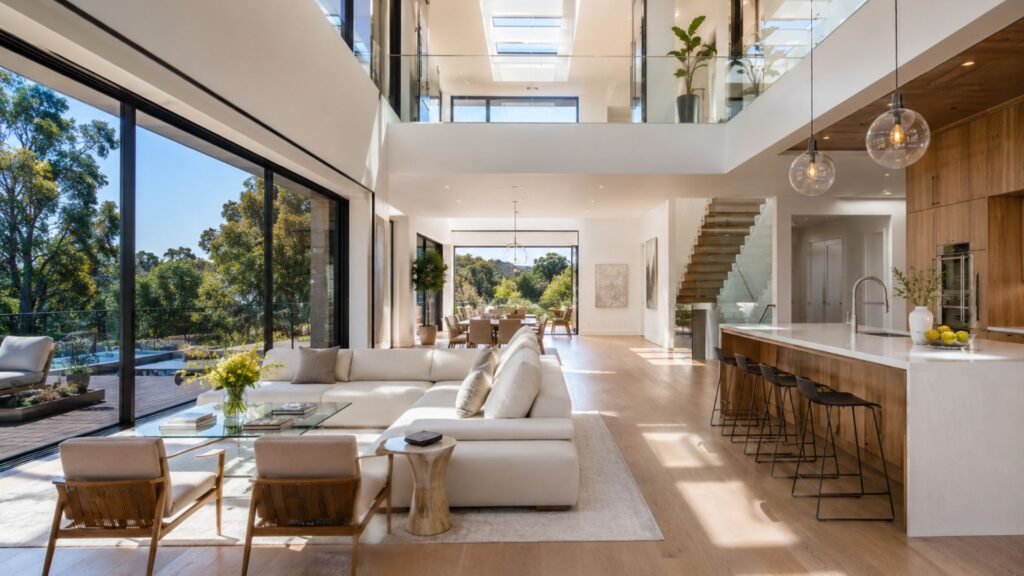
Open floor plans help natural light travel more freely through the home.
Instead of separating spaces with walls, modern layouts allow sunlight to move across multiple rooms.
Common design features include:
- Open living, kitchen, and dining areas
- Fewer interior partitions
- Glass interior doors or panels
- Higher ceilings that allow light to spread
These strategies are widely used in home interior design because they create bright and visually connected spaces.
Add Skylights and Roof Windows
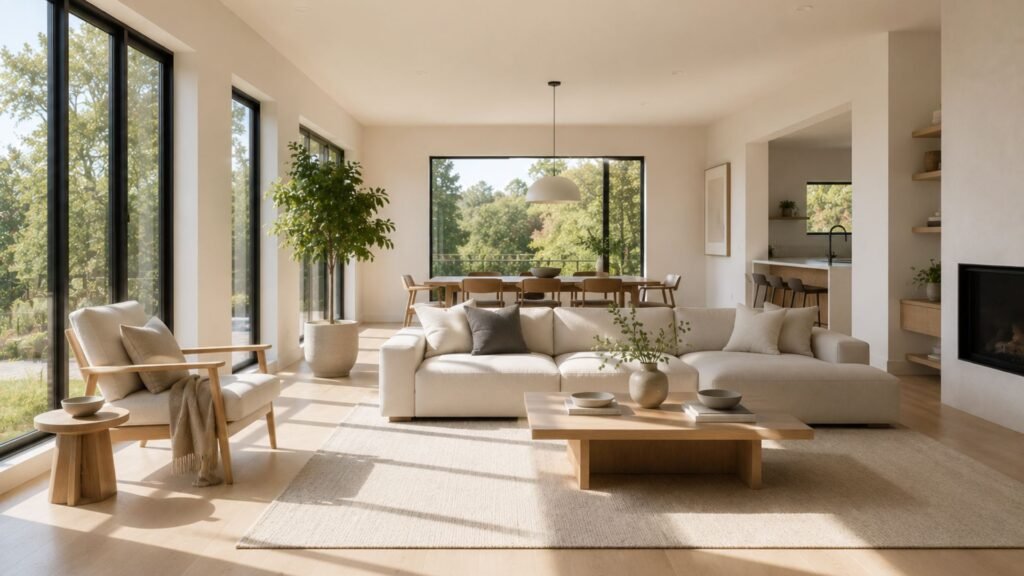
Skylights are widely used in natural lighting interior design because they introduce daylight into spaces where standard windows may not work effectively.
Common applications include:
- Bathrooms
- Hallways
- Staircases
- Interior kitchens
They are also useful in home addition design, where existing structures may limit wall openings.
Modern skylights often include energy-efficient glazing and automated ventilation options.
Use Interior Materials That Reflect Light
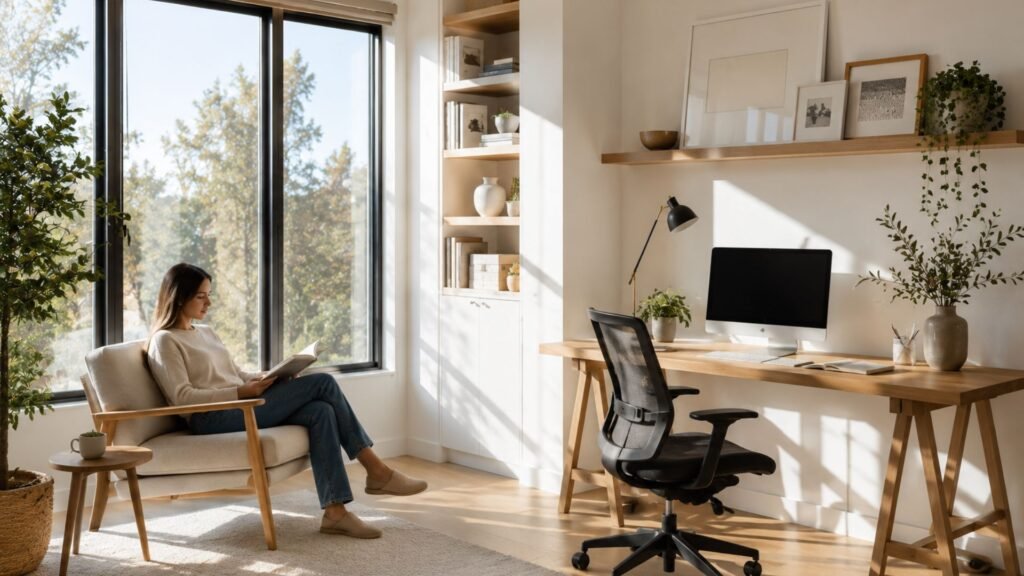
Materials and finishes inside the home influence how well daylight spreads through a room. When working with a custom home builder, these design choices are carefully planned to ensure surfaces enhance natural light rather than absorb it.
Designers often use vivid natural light concepts by combining reflective surfaces, light wall colors, and open layouts to make interiors feel brighter and larger.
Examples include:
- Light-colored wall finishes
- Reflective flooring materials
- Large mirrors
- Glass railings or partitions
- Bright countertops or cabinetry
These elements enhance natural light in interior design by allowing daylight to travel further across the space.
Connect Indoor and Outdoor Living Areas
Outdoor architectural features can also improve interior lighting. Modern buildings are designed to maximize natural light by creating stronger connections between indoor and outdoor spaces through glass features and open architectural layouts.
Features that help increase daylight include:
- Courtyards
- Glass patio doors
- Covered outdoor living spaces
- Light wells and atriums
These design choices allow more daylight to enter the home while maintaining comfort and privacy.
Balance Natural Light With Smart Lighting Design
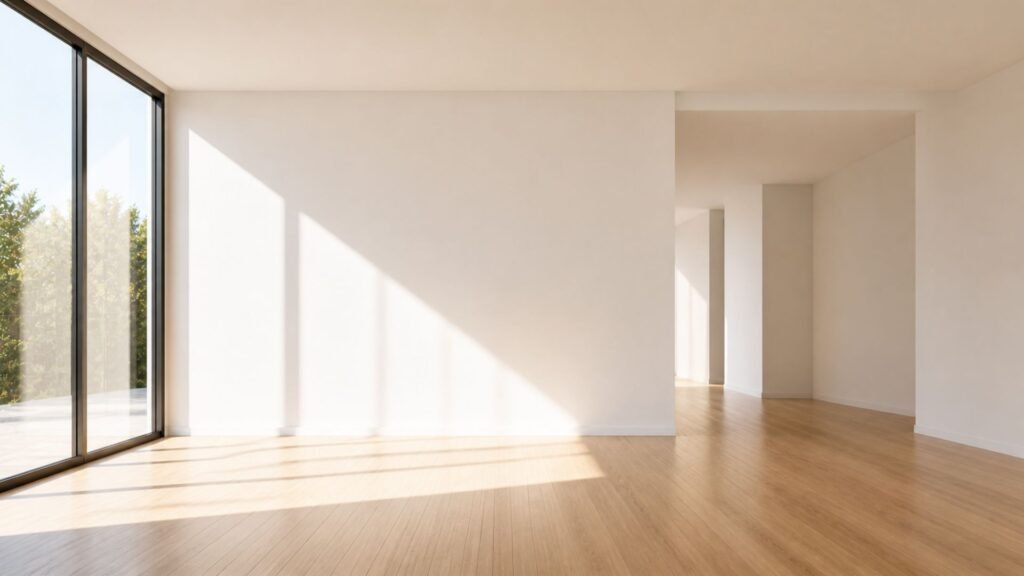
Natural light changes throughout the day, so interior lighting must complement it.
This concept is an important part of smart home interior design, where lighting systems adapt to the natural light available.
A balanced lighting plan includes:
- Ambient lighting for general brightness
- Task lighting for kitchens and work areas
- Accent lighting for architectural details
Combining these layers ensures the home remains comfortable at any time of day.
How Dave Isaacs Homes Helps Create Bright, Well-Designed Homes
At Dave Isaacs Homes, maximizing natural light is a core part of how each home is designed and built. Thoughtful daylight planning ensures every space feels open, comfortable, and highly functional for everyday living.
- Strategic window placement based on lot orientation
- Architectural layouts that allow daylight to flow through living spaces
- Structural planning that supports large openings and glass features
- Materials and finishes that enhance brightness indoors
- Collaboration between design and construction teams from the start
The goal is to create homes that feel naturally bright, balanced, and connected to the outdoors.
Frequently Asked Questions
How can I bring more natural light into my home?
You can increase daylight by adding larger windows, installing skylights, choosing lighter interior colors, using mirrors, and reducing heavy window coverings.
What direction should a house face for the best natural light?
South-facing windows generally provide the most consistent daylight throughout the day, while east-facing windows capture softer morning light.
Are skylights a good option for dark rooms?
Yes. Skylights are one of the most effective ways to bring daylight into interior spaces such as hallways, bathrooms, or stairwells.
Does natural light increase home value?
Homes with well-designed daylighting are often more appealing to buyers because bright interiors feel larger, healthier, and more comfortable.
What is smart home interior design?
Smart home interior design combines technology, lighting automation, efficient layouts, and modern materials to create comfortable and energy-efficient living spaces.
What are two things designers can do to maximize natural light?
Designers commonly maximize daylight by using larger strategically placed windows and creating open floor plans that allow sunlight to move freely through the home.
Final Thoughts
Natural light plays a crucial role in creating comfortable, visually appealing homes. From proper home orientation and larger windows to open layouts, skylights, and reflective materials, every design decision affects how daylight flows through a space. Thoughtful planning during the home design stage allows builders and designers to create brighter interiors that feel more open and connected to the outdoors. Modern buildings are designed to maximize natural light because well-lit spaces improve both functionality and everyday comfort. When natural light is integrated effectively into interior design with natural light principles, it enhances daily living while improving the beauty, efficiency, and overall atmosphere of a modern home.